The first thing I notice when picking up a wooden slingshot is not the polish or the figure in the grain. It is whether the frame tells my hand where to go.
A good handle usually does that without explanation. The waist finds the web of the hand, the lower section rests against the palm, and the fingers stop searching for a comfortable position. When that does not happen, changing grip names rarely fixes the problem.
Pinch grip and thumb support are often discussed as if every frame fits neatly into one category. Handmade wooden slingshots are less tidy. A small change in shoulder shape can make the same frame comfortable in both holds—or clearly better in one.
What people mean by a pinch grip
With a pinch grip, the thumb and index finger hold the frame close to the forks while the remaining fingers settle around the handle. The grip is concentrated high on the frame, so the shape immediately below the fork shoulders matters.
A narrow, clearly defined waist can help the hand return to the same place. Too much bulk in that area may force the fingers apart; too little may leave the frame feeling vague. Smooth transitions are important, but “smooth” should not mean featureless. The hand still needs landmarks.
Compact frames are often associated with pinch grip because they do not need a long handle to fill a closed fist. That does not mean smaller is always better. The fork shoulders must still provide a secure, comfortable area for the thumb and finger.
What changes with thumb support
In a thumb-supported hold, the thumb braces higher against one side of the frame while the fingers support the opposite side and handle. The exact contact points depend on whether the frame is symmetrical or shaped for a particular hand.
This is where an asymmetric wooden slingshot can make sense. More material can remain where the palm needs support, while the opposite side is relieved for finger clearance. The difference may look subtle in a front photograph and become obvious in the hand.
A useful thumb-support frame should feel secure without requiring the wrist to twist into an uncomfortable position. The goal is a repeatable hold, not the strongest possible squeeze.
Handle shape matters more than the label
The two solid-wood slingshots below both have an 80 mm outer fork width, yet their handles invite different contact with the hand.
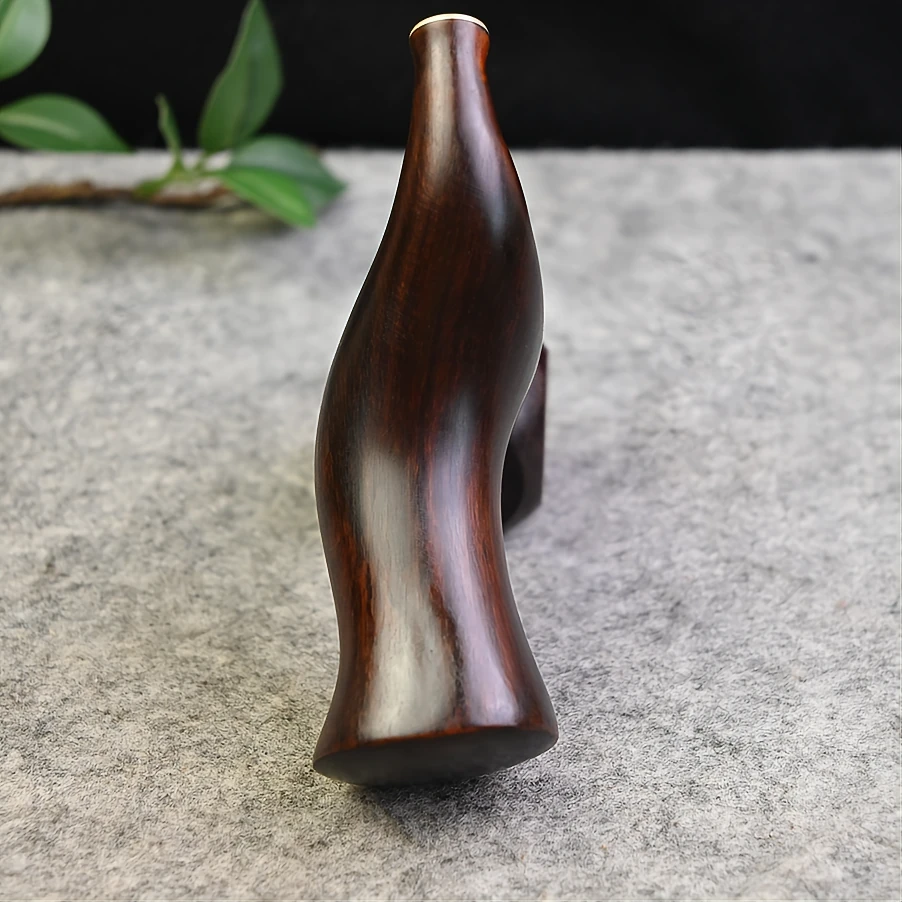
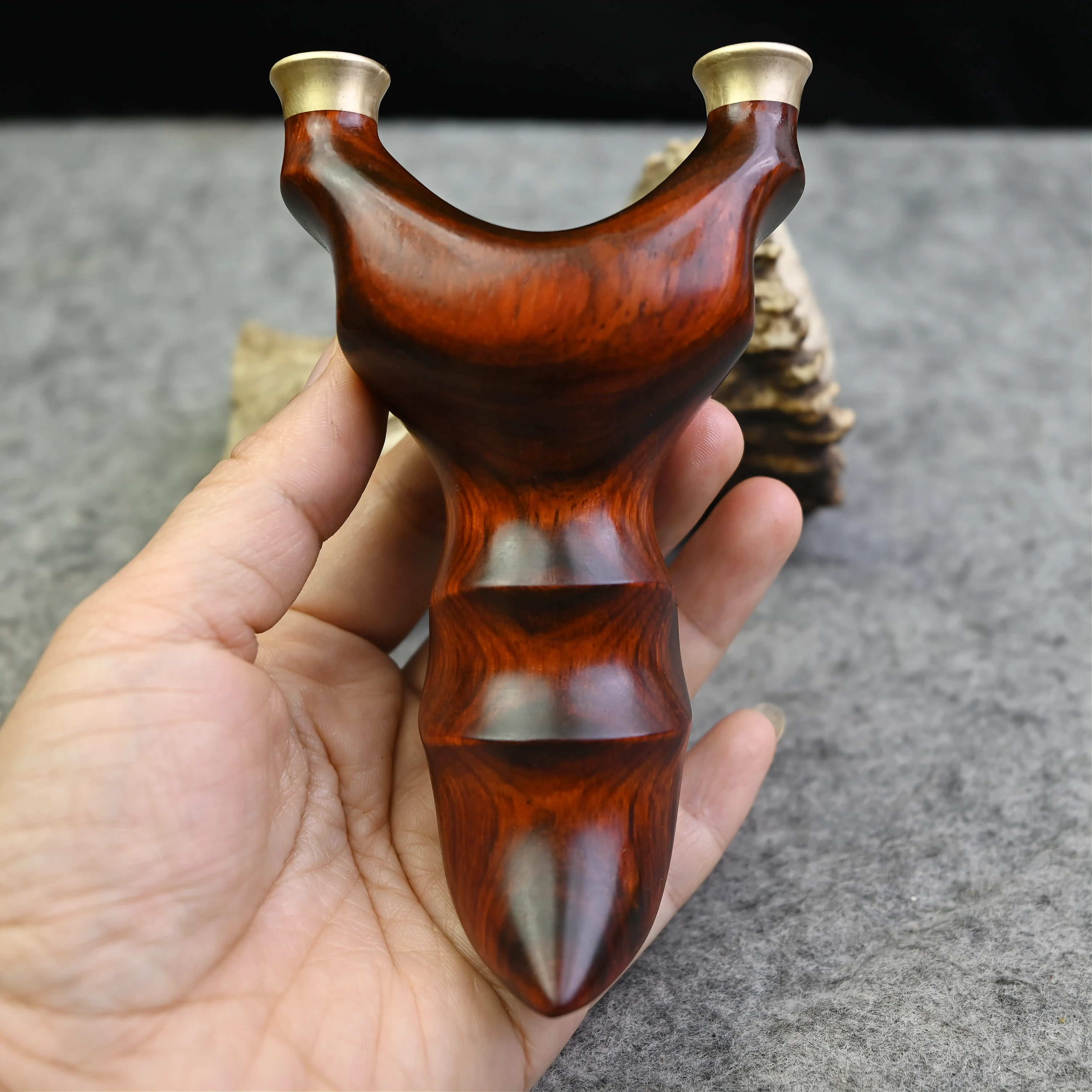
The Flying Tiger solid-wood round-tip frame is 120 mm high. Its longer, slimmer waist gives the fingers a clear place to close around the frame. The curved sides also leave room to adjust the hand slightly rather than locking it into one position.
The Large Mantis solid-wood frame is 130 mm high and carries more volume through the lower handle. Its broad shoulders lead into a rounded palm swell, which will appeal to someone who prefers more contact across the hand.
Photographs cannot decide which one is more comfortable for a particular person. They can, however, show why “80 mm slingshot” is not a complete description.
There is no single best slingshot grip for adults
Searches for the best slingshot grip for adults usually lead to a list of fixed answers. Real hands are less cooperative. Finger length, palm width, previous habits, and even a small difference in where the thumb rests can change the preference.
The most useful test is whether the frame can be held securely with a relaxed hand. If comfort depends on squeezing hard, the shape may not suit that grip. If the frame shifts when the hand relaxes slightly, the contact points deserve another look.
This is also why I am cautious about recommending a frame solely from hand length. A side photograph and the narrowest handle measurement often reveal more than a generic small, medium, or large label.
Dry handling comes before band setup
Before fitting bands, handle the bare frame in a calm indoor setting. Try the intended grip without pulling anything. Notice where the fork shoulders contact the thumb and index finger, whether an edge creates a pressure point, and whether the handle sits consistently after being picked up several times.
Do not use this as an excuse to imitate a full draw with an untested setup. The purpose is simply to evaluate the frame-to-hand fit while no elastic load is involved.
Once bands are installed, inspect the attachment and latex before use. A comfortable handle does not replace careful setup, eye protection, or a secure backstop.
Wood makes each handle slightly different
On a molded frame, every copy can be nearly identical. A handmade solid-wood slingshot carries small differences in grain, density, and final shaping. Those differences are part of the reason we photograph the exact item rather than using one representative product image.
The advantage is that the handle can be shaped with intention instead of following the easiest form to manufacture. The responsibility is to describe it honestly. Clear dimensions, several viewing angles, and photographs in the hand help a buyer judge whether the profile matches the way they prefer to hold a frame.
Choose the shape your hand can repeat
Pinch grip is not inherently more precise than thumb support, and thumb support is not automatically more comfortable. Consistency comes from a frame that returns naturally to the same position without excessive pressure or wrist tension.
Look beyond the wood species and finish. Study the waist, shoulders, side profile, and palm swell. If two frames share the same fork width, compare their height and handle volume. Those details are where an ergonomic wooden slingshot earns its description.
When unsure, email us with the frame you are considering and the grip you normally use. We can discuss the exact piece shown in the photographs rather than pretending one shape fits every hand.
Always inspect the frame and bands before use, wear eye protection, use a secure backstop, and comply with local law.