The way a band attaches to a wooden slingshot looks like a small detail until you have changed a few sets at the bench. Then it becomes part of the character of the frame.
I use two attachment styles on the slingshots shown here: screw-down quick clamps and the traditional wrap-and-tuck method. Neither one is automatically better. They solve the same problem in different ways, and each asks something different from the shape of the fork.
If you are deciding between them, it helps to look past speed alone.
What a quick clamp changes
A quick-clamp tip uses a cap and screw to hold the latex against a shaped surface. Loosen the cap, position the band, tighten it evenly, and the attachment is finished. There is no separate tying strip to keep track of and no wrapping sequence to repeat.
That convenience is real. If you change bands often, test different tapers, or simply prefer a tidy setup, a clamp makes the job less fussy. It is also easier to reproduce the same band position on both tips because the edge of the cap gives you a clear visual reference.
The clamp does not remove the need for care, though. Latex should sit flat rather than folded under the cap. The screw needs to be secure, but excessive force is unnecessary and can mark the band. I also check that the contact surfaces are clean before fitting a new set. A small piece of grit trapped against stretched latex is more important than it looks.
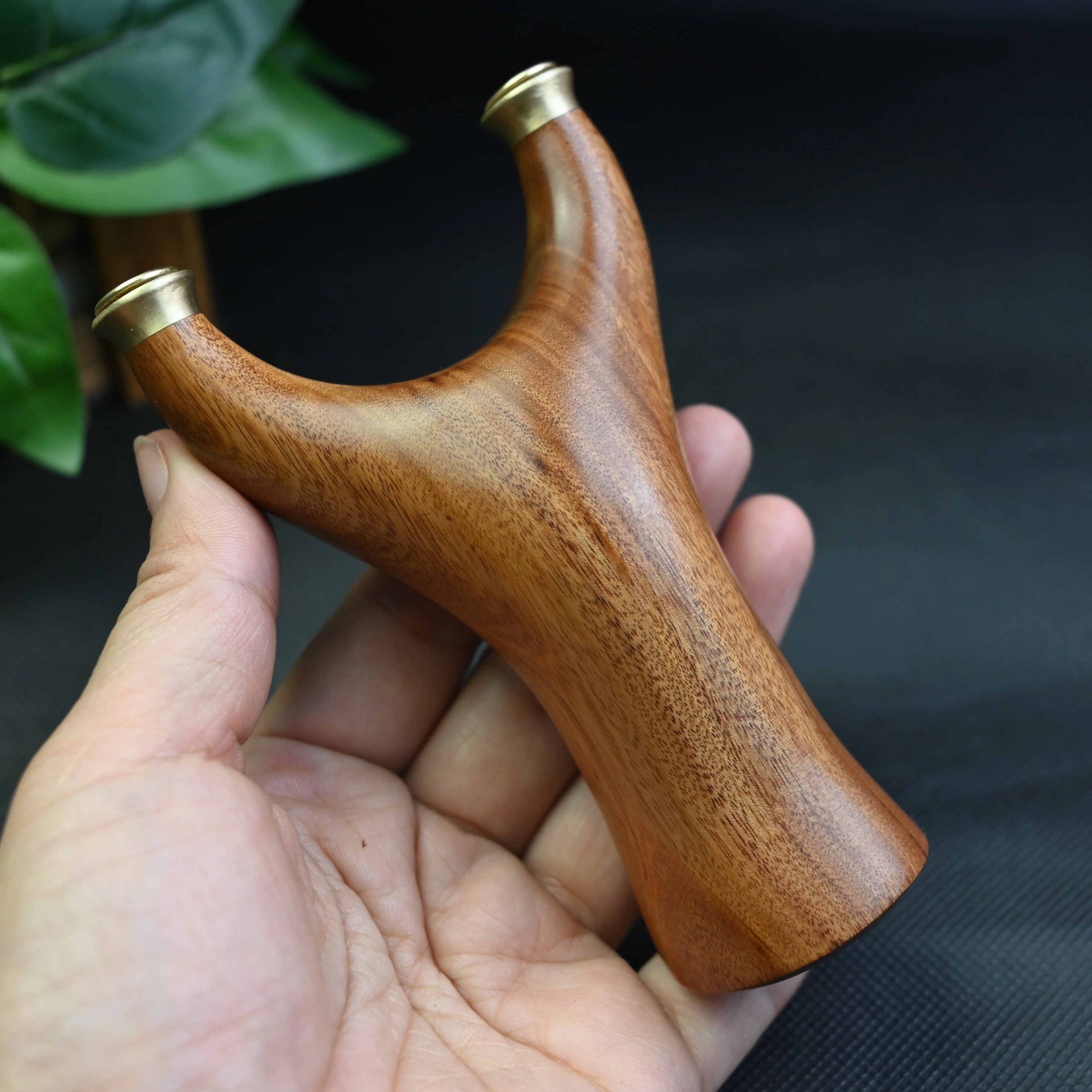
On the Desert Ironwood Flying Tiger quick-clamp slingshot, the brass caps add a deliberate mechanical detail to a dense, strongly figured piece of wood. The hardware is visible, so it becomes part of the design instead of something I try to disguise.
Why I still like wrap-and-tuck tips
Wrap-and-tuck attachment is simpler in terms of hardware. The latex lies over the fork tip and a narrow tying strip wraps around it under tension. The end of that strip is tucked under the final turns to lock everything in place.
There is a learning curve, especially the first few times. The wraps need to stay neat, and both sides should be attached at the same position. Once the method becomes familiar, however, it is dependable and easy to inspect. There is no screw to lose and no metal component interrupting the outline of the wood.
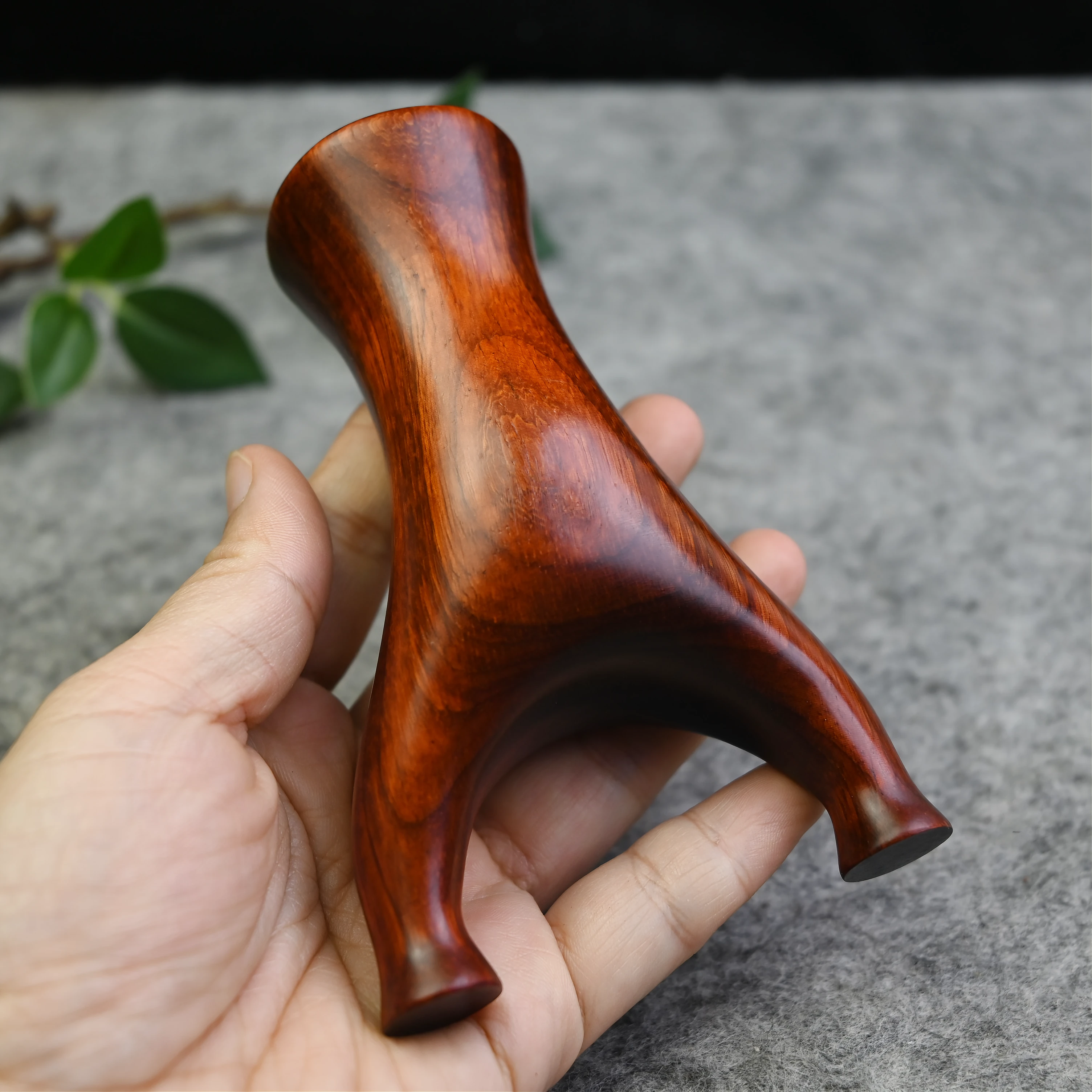
That clean outline matters on some frames. The Crimson Hardwood Sculpted U slingshot uses flared, all-wood tips intended for wrap-and-tuck bands. The attachment suits the frame because the whole piece remains visually quiet: wood, latex, and tying strip, without a cap sitting above the grain.
I also find that traditional tips allow a little more freedom in band placement. That can be useful, but it means the person fitting the bands must pay closer attention. A few millimetres of difference from one side to the other can leave the active band lengths uneven.
The fork tip matters as much as the method
It is tempting to compare only the clamp and the tying strip, but the shape underneath them does much of the work.
Edges that touch latex should be smooth and comfortably rounded. A sharp transition can concentrate wear in one spot. The surface should also give the band enough support without forcing it into an awkward bend. These details are handled while shaping and finishing the frame; they are not something a stronger screw or tighter wrap can correct later.
Before installing any band, I run a fingertip around the attachment area and look at it under angled light. Fingers often notice a rough point before eyes do. If the old band failed unusually close to the tip, that is a reason to inspect the surface rather than immediately fitting another set.
Which attachment should you choose?
Choose a quick clamp if you value fast, repeatable changes and like the look of visible hardware. It is especially practical for someone who experiments with several band dimensions or replaces sets frequently.
Choose wrap-and-tuck if you prefer an all-wood frame, do not mind learning a hands-on tying method, and want an attachment that can be maintained with very little hardware. It suits owners who enjoy the traditional side of wooden slingshots as much as the finished object.
The choice does not determine accuracy by itself. Consistent active length, appropriate latex, a well-centred pouch, and careful installation matter with either system. Our replacement tapered latex bandsets can be discussed by email before ordering if you are unsure whether a particular set suits your frame or attachment style.
A final check before use
Whichever method you use, inspect the bands before every session. Look for small edge cuts, pale stressed areas, surface cracking, or damage near the attachment. Confirm that both sides remain seated correctly. Replace a questionable set rather than trying to get one more session from it.
Quick clamps make band changes faster. Wrap-and-tuck tips keep the construction simple. The better choice is the one you can install carefully, inspect easily, and maintain without rushing.
That is usually the answer with handmade equipment: the detail that fits your habits is more useful than the feature that sounds best on paper.