An 80 mm outer fork width measures the distance between the outside edges of the two fork tips. It does not specify the inner gap, tip width, handle thickness, or frame height. Compare these measurements together before choosing a wooden slingshot.
An 80 mm slingshot sounds precise until two frames with the same width are placed side by side. One can feel compact and quick in the hand. The other can feel broad through the shoulders and noticeably fuller at the handle.
That is because “80 mm” usually describes only the outside distance from one fork tip to the other. It does not tell you the fork gap, tip width, overall height, handle thickness, or where the grip settles beneath the forks.
I still find outer width useful. It gives a buyer a starting point. It just should not be the only number on the page.
Outer fork width is not the fork gap
The outer fork width is measured across the widest outside edges of the tips. Fork gap is the open space between them. If two 80 mm frames use different tip widths, their gaps will be different.
The arithmetic is simple, but the way it appears in wood is not. A 14 mm round tip looks light and narrow. A 17 mm tip carries more visual weight and gives the top of the frame a broader stance. Rounded edges, asymmetry, and the angle of the forks make the difference more noticeable than three millimetres sounds on paper.
This is why product photos should show the front, back, sides, and a frame held in the hand. A specification tells you the scale; several honest photographs tell you the shape.
Two 80 mm wooden slingshots can feel very different
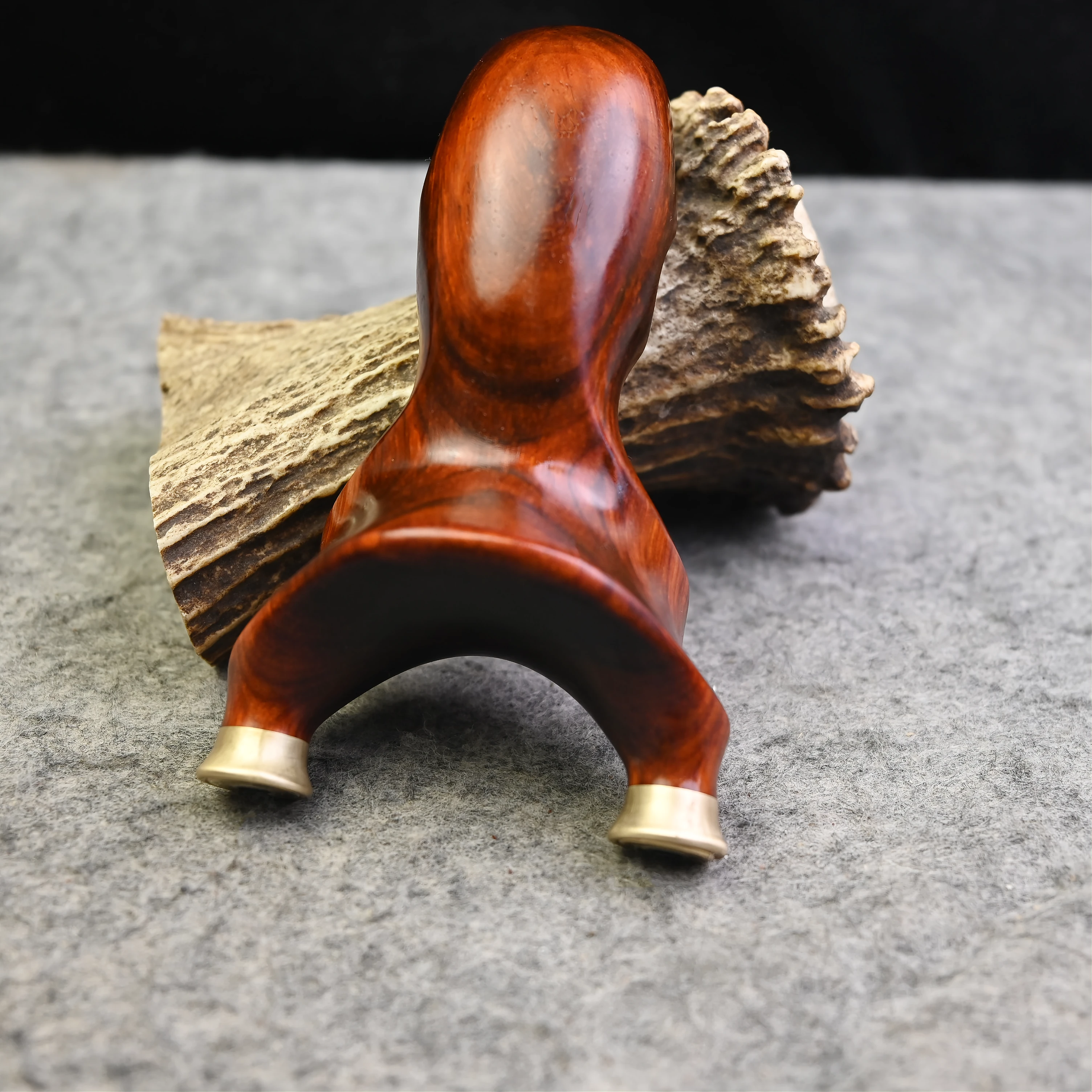
These two solid-wood frames share an 80 mm outer width, but they were not shaped to feel identical.
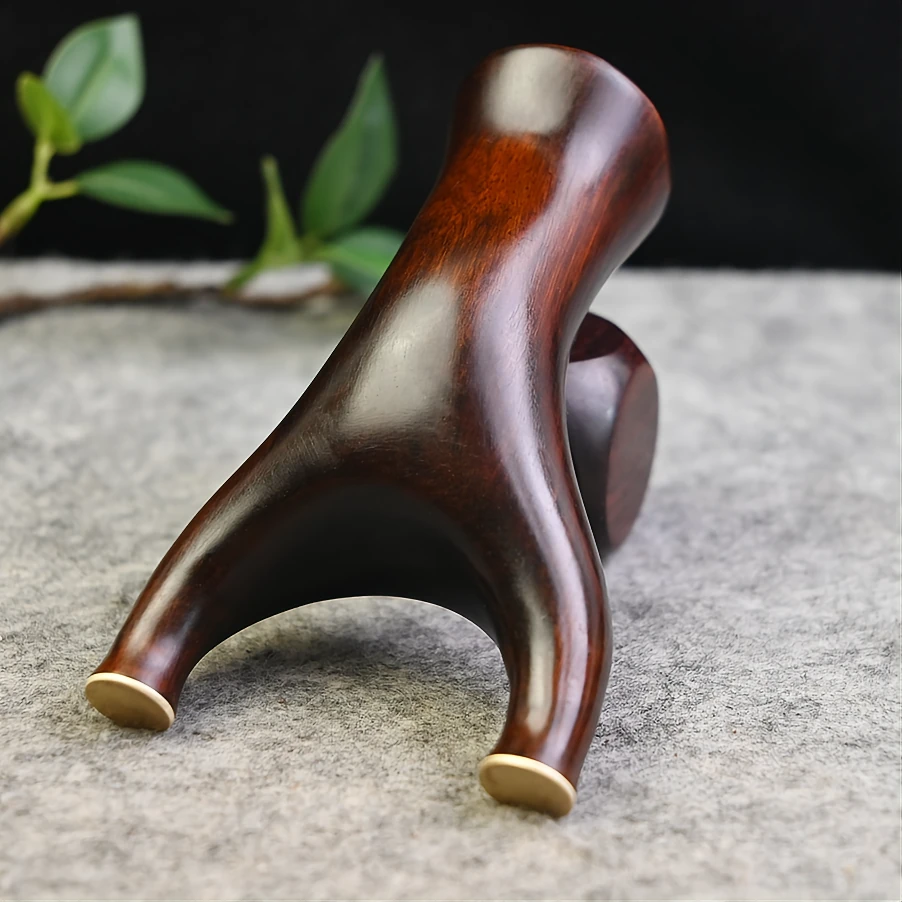
The Flying Tiger round-tip slingshot is 120 mm high with 14 mm tips. Its long waist and deep U-shaped opening make the outline look slender. The round tips keep the upper half visually light.
The Large Mantis solid-wood slingshot is 130 mm high with 17 mm tips. It has wider shoulders and a more pronounced palm swell. Even though the outside fork width remains 80 mm, the extra height and fuller handle give it a larger presence.
Neither set of dimensions is automatically better. They describe two different ways to organize the same outer width.
Tip width affects more than appearance
Fork tip width influences the space available for attaching flat bands and the amount of wood around that area. It also changes the inside opening when the outer width stays fixed.
That does not mean a wider tip should carry the widest possible band. Band dimensions need to suit the complete setup, not merely fit on the top surface. The attachment method, edge radius, latex thickness, taper, active length, and intended use all belong in the same conversation.
For a buyer comparing wooden slingshot dimensions online, tip width is worth checking because it is often omitted. An “80 mm frame” with 14 mm tips is not geometrically the same as an 80 mm frame with 17 mm tips.
Overall height changes where the handle meets the palm
An extra 10 mm of frame height may appear minor on a ruler, but a handheld object has very little spare space. That length can be used for a deeper palm swell, a longer waist, or more clearance below the fork shoulders.
Hand size matters, but it does not produce a universal chart. Two people with similar hands may prefer different grips. One may like a narrow waist that the fingers locate immediately; another may want more wood filling the centre of the palm.
This is why the phrase “best slingshot for adults” is too broad to be useful by itself. Adult hands vary, and so do preferred holds. Measurements help narrow the choice, while the handle profile determines whether the frame actually feels settled.
How I would compare dimensions before ordering
Start with four numbers: outer fork width, fork tip width, overall height, and the narrowest part of the handle. Then look at a straight front photograph and a side photograph. The front shows the fork geometry; the side shows whether the handle is flat, rounded, or strongly palm-filling.
Next, compare those measurements with a frame you already find comfortable. A ruler against your hand is less informative than a familiar object with known dimensions.
Finally, ask about anything the photographs do not show. Because our frames are shaped by hand and sold as the exact piece pictured, an email question about scale or grip is more useful than relying on a generic size label.
Eighty millimetres is a starting point
An 80 mm fork width is popular because it can produce a compact frame without making the fork area feel cramped. But the number alone does not decide comfort, quality, or suitability.
Look at the tip width. Look at the frame height. Pay attention to where the waist begins and how the handle expands below it. On a handmade wooden slingshot, those relationships are the real design.
Inspect the frame and bands before use, wear eye protection, use a secure backstop, and follow all laws that apply where you live.