Buying a handmade wooden slingshot online is different from ordering a standard factory model. The name of the pattern may repeat, but the grain, colour, weight, and final shaping belong to one piece of wood.
Good product photographs should let you examine that piece rather than invite you to imagine a better one. Measurements should describe the finished frame. The seller should also be clear about band attachment, condition, availability, shipping, and regional restrictions before taking payment.
Here is what I would check before sending an inquiry.
Confirm that the photographs show the item for sale
Ask whether you will receive the exact frame pictured. “Wood grain may vary” is reasonable for a production item, but it changes the buying decision when the main appeal is a particular figure or colour.
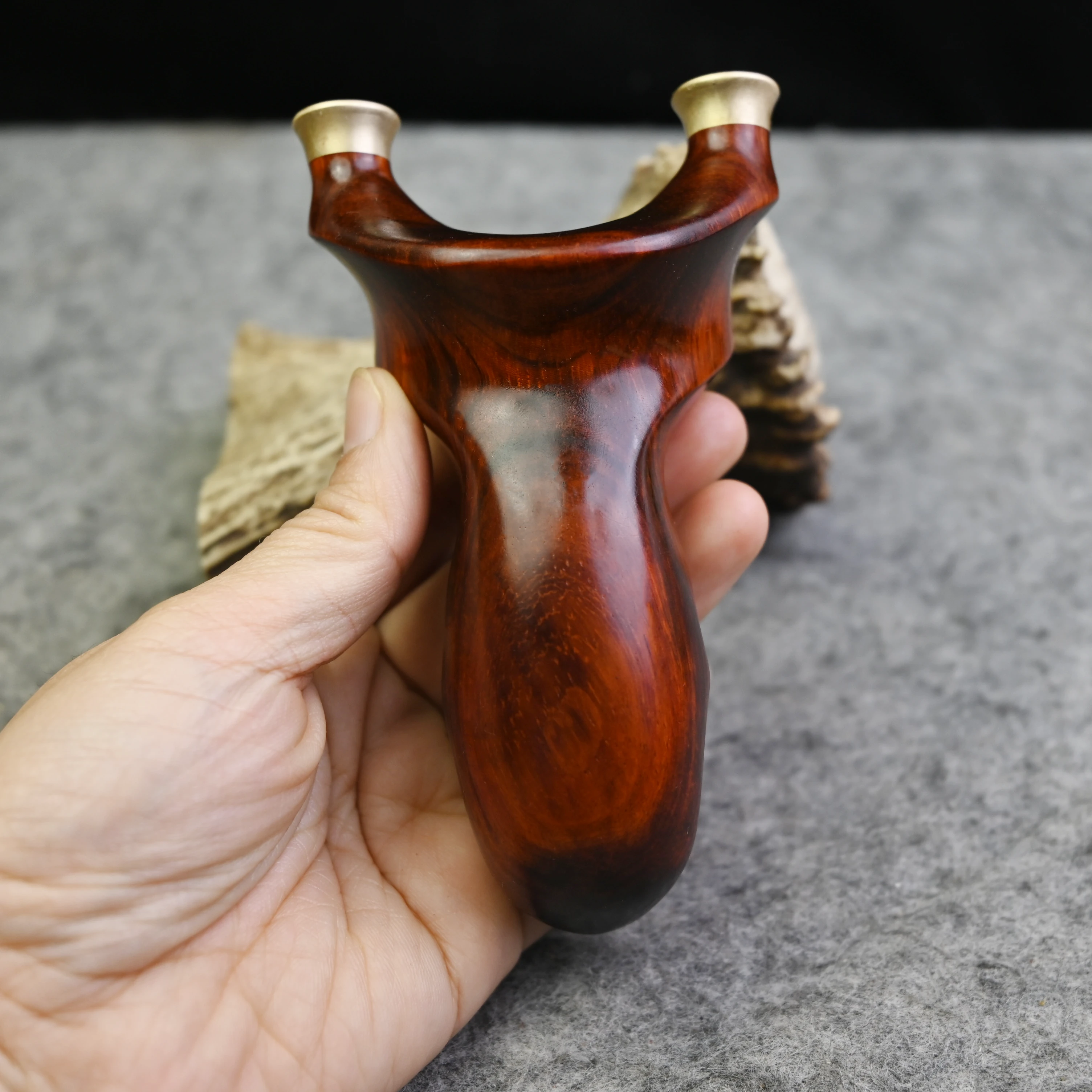
At minimum, look for a straight front view, the reverse, both sides, and close views of the fork tips. The front establishes proportions. Side photographs show handle thickness and palm swell. The reverse often reveals grain movement that is hidden in the hero image.
Consistent lighting is helpful, but highly edited colour is not. Wood will look slightly different under daylight and indoor light; it should still be recognisable as the same object.
Read measurements as a group
Outer fork width alone does not describe fit. Check overall height, tip width, fork gap if supplied, and the handle profile. A photograph beside a ruler can help, but written dimensions are easier to compare.
Two frames with an 80 mm outside width may feel quite different. Our article on what 80 mm fork width means compares a 120 mm-high Flying Tiger with a 130 mm-high Large Mantis.
If you already own a comfortable frame, measure it. Comparing familiar dimensions is more reliable than trying to estimate scale from hand size alone.
Look closely at the grain around the forks
Figured wood is attractive, but figure should not distract from sound construction. Inspect the grain through the fork shoulders and roots. Ask about any line that could be a check rather than assuming it is decorative grain.
A responsible seller should be willing to look again and answer plainly. Wood species alone is not a guarantee. The individual blank and the way the frame was oriented within it matter more.
The same honesty should apply to species identification. If a timber cannot be verified confidently, a general description such as “dense red-brown hardwood” is better than an exotic name chosen for marketing.
Choose the attachment style deliberately
Quick clamps make band changes convenient and provide a clear mechanical attachment. Traditional wrap-and-tuck tips keep the frame simple and metal-free. Neither is automatically the premium option.
Check that replacement bands are compatible with the tip width and attachment orientation. If hardware is fitted, ask what tool is needed and whether the fasteners or caps can be replaced. If the frame uses traditional tips, look for smooth radiused edges rather than sharp decorative corners.
Product photos should answer practical questions
The image gallery for our Large Mantis solid-wood slingshot, for example, shows the front outline, side thickness, palm swell, reverse grain, and fork-tip shape. Those views are intended to help someone reject the frame as much as choose it. If the handle clearly looks too full for a buyer’s preferred hold, the gallery has done its job.
Ask how ordering and shipping work
Before payment, confirm that the item is still available, the final price, payment method, destination, shipping service, taxes or duties, and any restrictions. Save the written confirmation.
Zenith Fork Studio handles orders by email so availability and destination can be checked before payment details are agreed. We do not accept requests for Singapore or Australia (NSW/VIC), and buyers should not request shipment anywhere these items are prohibited.
An unmarked parcel should mean discreet, protective packaging—not an attempt to evade customs declarations or local law. Accurate communication matters more than an exaggerated promise of “worldwide shipping.”
Check who stands behind the listing
A useful store has a working contact address, an explanation of the workshop, and original writing or documentation that reflects the products being sold. Policies should be written in direct language. Product descriptions should distinguish measured facts from opinions.
Be cautious when several shops use identical photographs, when every rare wood is always available, or when the seller cannot provide another view of a supposedly one-of-one item.
Buy the frame you can evaluate
The best online listing reduces uncertainty. It shows the exact wooden slingshot, gives finished measurements, explains the attachment method, and makes it easy to ask a specific question.
A handmade object will never be perfectly communicated through a screen. Honest photographs and precise details can still give a buyer enough information to make a calm decision— including the decision not to buy that particular frame.
Inspect the frame and bands before use, wear eye protection, use a secure backstop, and follow all applicable laws.