Tapered flat bands are easy to recognize: they are wider at the fork and narrower near the pouch. Straight bands keep roughly the same width along their active length. That small difference in outline changes how much latex has to move and where the band carries material.
It does not make one shape universally superior. A useful bandset is a balance of latex thickness, width, taper, active length, draw length, pouch, and intended use. Looking at taper alone is like judging a wooden frame only by its height.
What taper changes
When the pouch is released, the latex near it must travel quickly. Narrowing that end reduces moving mass. The wider fork end retains more material around the attachment area, while the lighter pouch end can return with less material to carry.
That is why a moderate taper often feels lively compared with a straight strip cut from the same latex. The difference is not magic and it is not created by the printed ratio alone. Poorly cut edges, an unsuitable active length, or an oversized pouch can erase the benefit.
A taper should also be symmetrical. If one side narrows abruptly or contains a small nick, stress will not be distributed as intended.
Why straight bands still have a place
Straight bands are simple to cut, easy to compare, and useful when consistency of width is more important than reducing mass near the pouch. They can produce a smooth, predictable draw when the width and thickness are appropriate.
They are also helpful for learning what a particular latex feels like. With fewer changing dimensions, it is easier to notice the effect of active length or thickness. That makes a straight band a sensible reference, even if a tapered setup is later preferred.
The disadvantage is that a width chosen to provide enough material at the fork remains present all the way to the pouch. Depending on the rest of the setup, that can make the return feel less crisp.
A more aggressive taper is not automatically better
It is tempting to read taper ratios as performance scores. They are not. A very narrow pouch end may feel fast, but it concentrates more work in less latex and can shorten useful life. It may also feel less forgiving if the band length or intended load is poorly matched.
For a general replacement bandset, I prefer a moderate, clean taper over an extreme one. It gives the geometry room to work without turning the narrow end into a disposable weak point.
Our 20–12 mm tapered flat bandsets use that practical approach and are supplied with lightweight microfiber pouches.
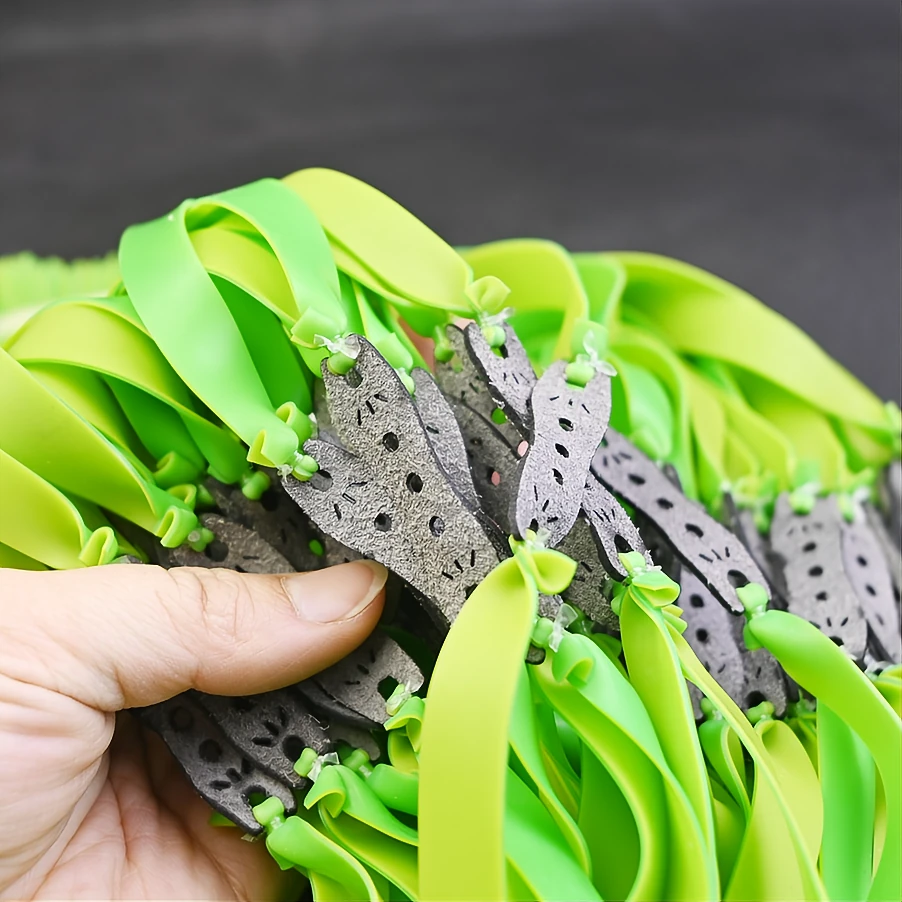
Edges matter as much as dimensions
Latex commonly begins to fail from an edge defect. A dull cutter can drag, leave a tiny wave, or create a notch that is difficult to see until the band is stretched. Clean parallel or tapered cuts need a sharp blade, a stable guide, and an undamaged cutting surface.
Inspect both edges before fitting a band. Run your eyes along them under good light rather than stretching aggressively to search for faults. Once installed, check the area near the pouch tie and the fork attachment, since those locations experience repeated handling and concentrated stress.
Compare bands by more than the printed taper
When two bandsets are described as “20–12,” they may still behave differently. The latex formulation and thickness may differ. One active length may be shorter. The pouches may have different mass, hole positions, or stiffness. Even storage history can change the feel of natural latex.
For a fair comparison, change one variable at a time. Use the same frame, attachment method, draw reference, and pouch style where possible. Make a note of comfort and control rather than chasing a single impression from the first draw.
Choosing between tapered and straight flat bands
Choose a tapered band when you want to reduce material toward the pouch and the complete setup is designed around that shape. Choose a straight band when you value a simple, consistent reference or have a specific setup that works well with uniform width.
In both cases, correct fitting and regular inspection matter more than the label. Replace latex that shows nicks, whitening, cracks, or an unexplained change in feel. Store spares away from heat, sunlight, tension, and contaminants; our latex band storage guide covers the details.
There is no best flat-band taper for every wooden slingshot. There is only a well-matched combination that feels controlled, attaches securely, and is inspected before use.
Wear eye protection, use a secure backstop, and comply with local law.