Before buying a wooden slingshot, compare outer fork width, clear fork gap, tip width, overall height, handle thickness, and finished weight. These measurements describe different parts of the frame. No single number establishes grip comfort, and an unlisted dimension should be confirmed with the seller rather than estimated from a photograph.
“It’s an 80 mm frame” is a useful beginning to a product description. It is rarely enough to finish the conversation. An outside width says little about how much wood rests in the palm or where the fingers find the waist.
The easiest way to avoid confusion is to keep a short measurement checklist beside the product gallery. Each number should refer to an identifiable part of the finished piece.
Outer fork width: the overall span
Outer width is the distance across the outside of the fork tips. Ask where the measurement was taken if the tips flare or curve. The widest part of a decorative shoulder may not be the same point as the band attachment line.
Our Flying Tiger round-tip frame is listed at 80 mm outer width. The newer sculpted frame is 85 mm wide. That difference establishes their outside span, but it does not tell you that the second has a larger clear opening.
For that distinction, read the 80 mm versus 85 mm comparison.
Fork gap: the clear opening
The gap is the empty space between the inside edges of the forks. On a rounded wooden frame, the opening can change from the top of the tips toward the fork roots. A useful measurement identifies the location as well as the distance.
Ask for a direct measurement rather than calculating it from outside width and tip width. Those three measurements may be taken along different lines on a sculpted frame. Rounded edges and angled faces make a neat calculation less reliable than it first appears.
If a seller cannot supply the gap immediately, a ruler placed across the relevant opening provides helpful context. It should still be accompanied by a written number.
Tip width: identify the contact surface
Tip width describes the material available around the band attachment area. The Flying Tiger round-tip listing specifies 14 mm tips; the Large Mantis specifies 17 mm; the 85 mm sculpted frame specifies 18 mm.
Those figures do not prescribe the correct band width or attachment method. A flat surface beneath a clamp and a rounded traditional tying tip work differently. Request an attachment close-up when you need to understand what the quoted width describes.
Height: compare it with the grip position
Overall height runs from the lowest part of the handle to the highest point of the frame. It helps establish scale, but two frames of equal height may place the grip at different levels.
Look at where the waist begins beneath the shoulders. A long lower handle may fill the palm, extend below it, or simply change the balance. None of those effects can be read from overall height alone.
The Large Mantis solid-wood frame is 130 mm high, while the Flying Tiger round-tip is 120 mm. Their side profiles explain the difference better than treating 10 mm as a universal size step.
Handle thickness: measure more than one point
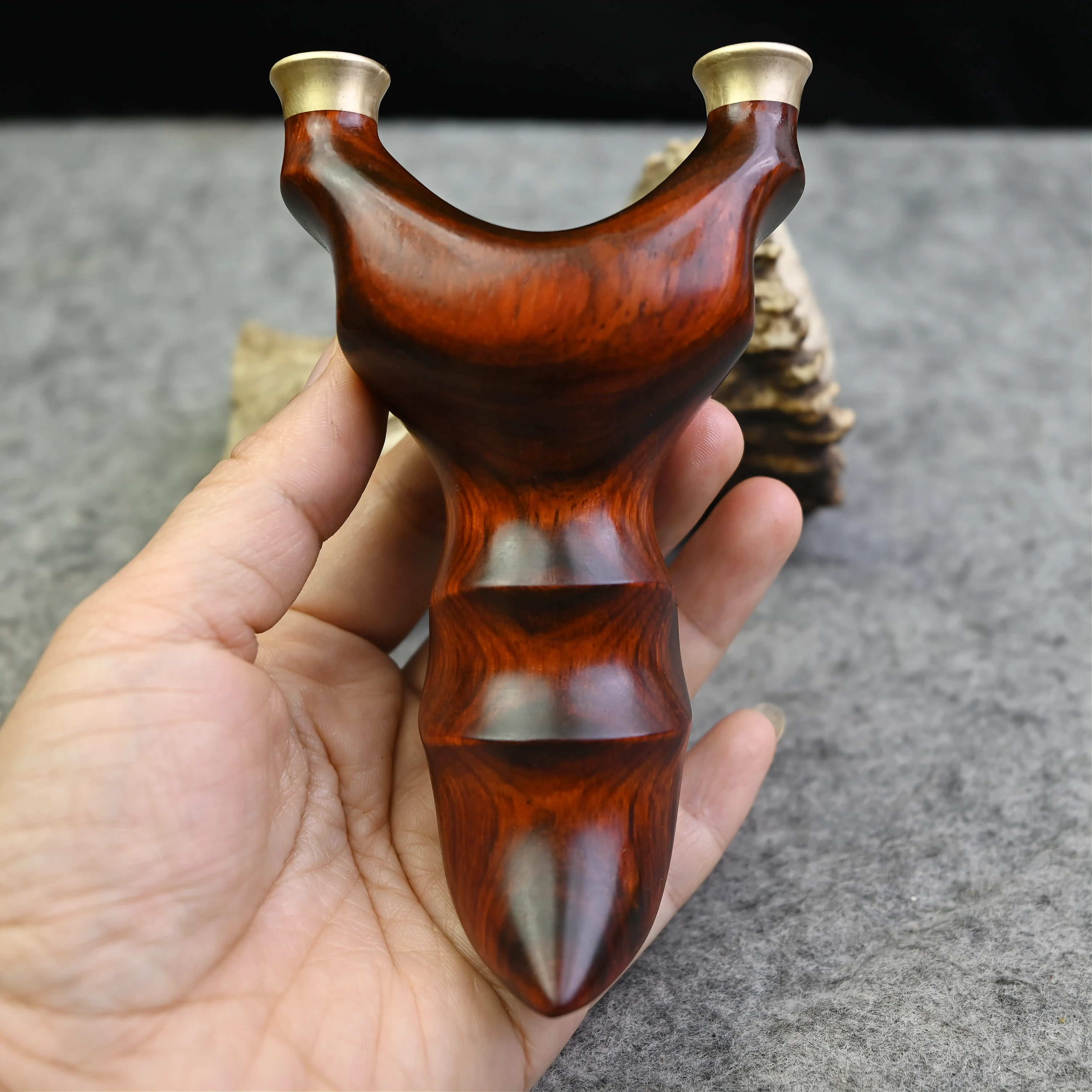
A sculpted handle does not have one uniform thickness. The narrow waist and the fullest part of the palm swell may differ substantially. When comparing fit, ask for both points and specify which dimension you mean: front-to-back depth or side-to-side width.
Side photographs help explain the numbers. A measurement without a location can be almost as ambiguous as no measurement at all. On an asymmetric piece, also confirm which face is intended to rest against the palm.
Our handedness guide gives wording you can use to describe the holding hand and drawing hand clearly.
Finished weight: define what is on the scale
Ask whether the quoted weight is for the bare frame or includes hardware and bands. Comparing a bare wooden frame with an assembled setup introduces a difference that has nothing to do with the wood itself.
Weight does not establish timber species or quality. A dense species in a small outline can weigh less than a larger frame made from lighter wood. Balance and grip security also influence how a frame feels in use.
We do not currently publish finished weight for every piece. If it matters to your purchase, request it before payment rather than relying on a general description such as “dense hardwood.”
A clear measurement request
Try this when a listing leaves questions unanswered:
Could you confirm the clear fork gap at the attachment line, handle depth at the waist and palm swell, and bare-frame weight for this exact piece? I hold the frame in my left hand and draw with my right.
Change the hands to match your hold and include the product name. This gives the seller specific questions instead of asking whether an unspecified frame will “fit well.”
Measurements narrow uncertainty; they do not replace handling the object. Combine them with the full gallery and our solid-wood buying guide. The aim is to understand the particular piece before ordering, including the details that still need confirming.